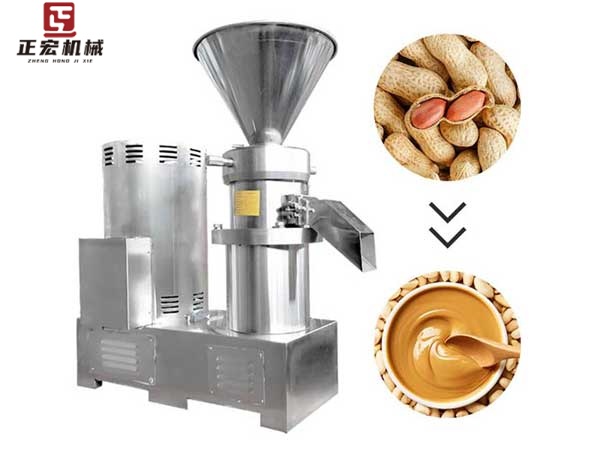
How Can a Single Grinder Turn Peanuts into Smooth Peanut Butter at Industrial Scale?
2026-06-02
Peanut butter has become one of the most popular nut-based products worldwide, widely used in bakery production, confectionery manufacturing, ready-to-eat foods, nutritional products, and household consumption. As market demand continues to grow, manufacturers are no longer focused solely on producing peanut butter—they are increasingly concerned with achieving consistent texture, stable quality, high production efficiency, and cost-effective large-scale manufacturing.The journey from roasted peanuts to smooth, creamy peanut butter may appear simple, but achieving industrial-scale production requires far more than basic crushing equipment. Particle size control, temperature management, grinding precision, production capacity, and equipment durability all play critical roles in determining the final product quality.This is where a professional Peanut Butter Grinder becomes indispensable. Through advanced grinding technology, high-quality stainless steel construction, and precision-controlled processing systems, a single grinder can transform raw peanuts into fine, uniform peanut butter while supporting continuous industrial production.1.Why Peanut Butter Production Demands Professional Grinding EquipmentThe Challenge of Achieving a Smooth TextureConsumers expect peanut butter to be creamy, spreadable, and free from coarse particles. However, peanuts contain a high percentage of natural oils, making them significantly different from dry materials such as grains or spices.During grinding, the equipment must simultaneously break down peanut particles and release natural oils without generating excessive heat. If grinding precision is insufficient, the finished product may contain visible granules, resulting in an inconsistent mouthfeel. On the other hand, excessive heat can affect flavor, aroma, and nutritional value.For manufacturers aiming to produce premium-quality peanut butter, ordinary crushing equipment often struggles to deliver the required level of fineness and consistency. Professional grinding systems are specifically engineered to overcome these challenges.The Need for Stable Industrial ProductionIn modern food processing facilities, productivity is equally important. Small-batch grinding methods may work for artisanal production, but they are incapable of meeting the demands of commercial-scale operations.Whether supplying supermarkets, food service providers, bakeries, or export markets, manufacturers require equipment capable of maintaining stable performance throughout extended production cycles. Consistent output, uniform particle size, and reliable operation become essential factors in achieving profitability and customer satisfaction.2.The Technology Behind High-Quality Peanut Butter ProductionPrecision Grinding Creates Uniform Particle SizeThe most important function of a peanut butter grinder is its ability to achieve highly uniform particle size reduction.Modern grinding systems utilize precision-engineered grinding rollers, grinding discs, or colloid grinding heads to process peanuts into an exceptionally fine paste. Depending on production requirements, particle sizes can be controlled within a range of 2 to 50 microns, ensuring a smooth and consistent texture throughout the final product.Unlike traditional grinding methods that often produce uneven results, precision grinding technology minimizes particle size variation and eliminates the "grainy" texture that can negatively impact product quality.For manufacturers seeking premium peanut butter, this level of control directly contributes to improved consumer acceptance and stronger brand reputation.Advanced Grinding Components Improve Product QualityThe grinding rollers used in professional peanut butter grinder s are manufactured from food-grade 304 stainless steel. This material offers excellent corrosion resistance, hygienic performance, and durability under continuous operation.The smooth stainless-steel surfaces help prevent contamination while preserving the natural color and flavor of food ingredients. In addition to peanuts, the same equipment can process sesame seeds, beans, egg yolks, and specialty filling materials, making it a versatile investment for food manufacturers.The use of high-quality stainless steel components also extends equipment lifespan while simplifying cleaning and maintenance procedures.Efficient Cooling Protects Product IntegrityHeat generation is one of the primary concerns during fine grinding operations. Excessive temperatures can alter flavor profiles, degrade nutrients, and negatively affect product consistency.Advanced grinder models incorporate cooling systems that regulate operating temperatures and prevent excessive heat buildup within the grinding chamber. Combined with precision-engineered rotor and stator assemblies, these cooling mechanisms ensure that peanuts are processed efficiently while maintaining their natural taste and nutritional properties.This capability is especially important for premium peanut butter products where flavor preservation is a critical quality factor.3.Equipment Designed for Industrial ProductionHigh Output Capacity Supports Large-Scale ManufacturingIndustrial peanut butter production requires equipment capable of handling substantial throughput without compromising quality.The Four-Roll Grinder features a 5.5kW motor and variable-frequency speed control system, delivering production capacities of up to 2 tons per hour. For medium-sized operations, the Two-Roll Grinder provides output levels of approximately 1 ton per hour while maintaining consistent grinding performance.For manufacturers requiring even greater flexibility, the JMS-180 Grinder offers production capacities ranging from 0.6 to 6 tons per hour, allowing businesses to scale operations according to market demand.This production flexibility enables food processors to efficiently serve both local markets and large-scale export customers.Variable Frequency Technology Improves Process ControlDifferent peanut varieties, moisture levels, and product formulations often require adjustments during processing.The integration of advanced frequency converter technology allows operators to precisely control grinding speed according to production requirements. The variable-speed system delivers smoother operation, lower noise levels, improved energy efficiency, and enhanced equipment longevity.By adjusting processing parameters, manufacturers can produce peanut butter with varying textures and viscosities while maintaining consistent quality across production batches.Continuous Operation Enhances ProductivityIndustrial food production environments frequently require equipment to operate for extended periods without interruption.The grinder's robust mechanical structure, high-strength alloy steel spindle, premium bearing systems, and industrial-grade motors ensure stable performance during continuous operation. Even after 24 hours of operation, bearing temperatures remain within controlled limits, demonstrating the equipment's ability to support demanding production schedules.This reliability reduces downtime, improves production planning, and increases overall manufacturing efficiency.4.Beyond Peanut Butter: A Versatile Processing SolutionSuitable for Multiple Food ApplicationsAlthough widely used for peanut butter production, the grinder is far more than a single-purpose machine.Its adaptable grinding system allows manufacturers to process a wide range of raw materials, including sesame seeds, soybeans, walnuts, almonds, spices, grains, and specialty food ingredients. By simply adjusting grinding parameters or replacing grinding components, the same machine can serve multiple production lines.This versatility significantly improves equipment utilization rates and helps manufacturers maximize return on investment.Supporting Diversified Product DevelopmentAs consumer preferences evolve, food manufacturers are increasingly introducing new products to remain competitive.The ability to produce sesame paste, nut spreads, bean fillings, seasoning pastes, and various specialty ingredients using the same grinder creates opportunities for product diversification without substantial additional equipment investments.For growing food businesses, this flexibility can become a major competitive advantage in rapidly changing markets.5.Why Modern Food Manufacturers Choose Professional GrindersEasier Operation and Reduced Labor RequirementsModern grinder systems are designed with user-friendly controls that simplify daily operation. Parameters such as grinding speed and processing time can be adjusted through intuitive control interfaces, reducing operator workload and minimizing human error.Automated feeding and discharge systems further streamline production workflows, allowing fewer employees to manage larger production volumes.Hygienic Design Meets Food Industry StandardsFood safety remains a top priority in every processing facility. Components that come into contact with food materials are manufactured from food-grade stainless steel and designed with smooth surfaces that minimize residue accumulation.Quick-disassembly structures allow operators to clean critical components efficiently, reducing sanitation time and supporting compliance with strict food safety regulations.Long Service Life and Reliable PerformanceIndustrial equipment represents a significant investment, making durability an important consideration for manufacturers.The grinder's reinforced frame, vibration-reduction design, overload protection systems, and high-quality components contribute to a service life of five to eight years under normal operating conditions. These features help reduce maintenance costs while ensuring consistent production performance over the long term.Producing smooth, high-quality peanut butter at industrial scale requires much more than simply crushing peanuts. It demands precision grinding technology, stable production capacity, effective temperature control, hygienic design, and long-term operational reliability.Modern Peanut Butter Grinder s integrate all of these capabilities into a single machine. From precision particle size reduction and high-capacity production to versatile material processing and easy maintenance, they provide food manufacturers with a complete solution for efficient peanut butter production.For businesses seeking to improve product quality, increase production efficiency, and expand manufacturing capabilities, investing in a professional grinder is not merely a production upgrade—it is a strategic step toward sustainable growth and long-term success in the competitive food processing industry.Facing the major trend of the global food industry transitioning towards automation, cleanliness, and intelligence, Rongcheng Zhenghong consistently upholds the business philosophy of "Integrity Develops the Market, Quality Builds the Brand, Innovation Ensures Development, Service Creates Image." We not only provide individual equipment but are also committed to offering complete factory solutions covering process design, equipment selection, installation/commissioning, and personnel training.Whether you are seeking to establish a new filling production base or aiming to intelligently upgrade existing production lines, Rongcheng Zhenghong will be your trustworthy technical partner. We look forward to collaborating with peers in the global food industry, using sophisticated equipment and professional services to jointly promote quality upgrades in the world's food industry.