Steam-Heated Planetary Mixing Wok,One Machine Outperforms Three
2026-06-02
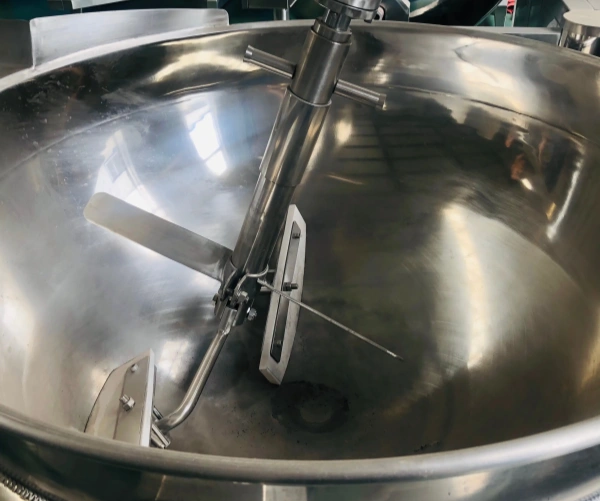
1. Industry Background and Equipment Evolution: Why Traditional Woks Are Being Phased OutIn today’s rapidly evolving food processing industry, balancing production efficiency with product quality has become a core challenge for business managers. The transition from traditional manual stirring to semi-mechanized mixing, and now to fully automated high-integration cooking equipment, reflects an urgent industry-wide need for standardization, scalability, and hygienic production. In the past, many food processors relied on open jacketed kettles with manual labor to cook high-viscosity materials such as fillings and sauces. While this approach required lower initial investment, its drawbacks were obvious—manual stirring cannot guarantee uniform heat distribution. The area near the pot wall often overheats and burns, while the center may not yet reach the required temperature. At the same time, per-batch output is limited, requiring multiple pots and multiple workers per shift, resulting in high labor and energy costs. It is precisely in response to these pain points that the steam-heated planetary mixing wok emerged, quickly becoming a popular solution in the food processing industry with its “one machine outperforms three” performance.The claim “one machine outperforms three” is not simple marketing rhetoric; it is based on fundamental breakthroughs in mechanical structure and working principles. Traditional jacketed kettles use fixed unidirectional stirrers with a fixed gap between the blade and the pot wall, making it impossible to effectively scrape and turn high-viscosity materials near the wall. This leads to low heat transfer efficiency, long cooking times, and poor batch-to-batch consistency. In contrast, the planetary mixing wok uses a unique planetary motion mechanism. The mixing blades revolve around the central axis of the pot while simultaneously rotating on their own axes. This compound motion allows the scraper to maintain continuous, complete contact with every part of the pot’s inner surface—leaving no dead zones. It is precisely this mechanical innovation that enables one planetary mixing wok to achieve the output of three or more traditional woks in the same amount of time, while significantly reducing energy and labor consumption. For food processing businesses, this is not just equipment replacement—it is a dual optimization of production efficiency and cost structure.
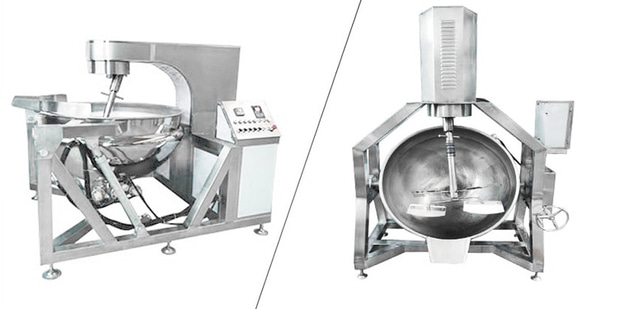
The drive system consists of two motors: the main mixing motor is 4 kW, driving the planetary mixing mechanism (both revolution and rotation); the hydraulic power unit motor is 0.75 kW, powering the hydraulic tilt and, where applicable, the hydraulic lift of the mixing arm. Mixing speed can be adjusted steplessly from 0 to 35 RPM via the VFD, covering the processing requirements for most food materials—from thin liquids to highly viscous elastic pastes. The design working pressure is 0.3 MPa, corresponding to a saturated steam temperature of approximately 143°C, which is sufficient for the vast majority of food cooking and concentration processes.4.2 Material Selection Logic for the Pot ConstructionOne might ask: why use different materials for different parts of the same pot? This is actually a very rigorous engineering consideration. The inner liner, which contacts the food, uses 304 stainless steel because it has a smooth surface, is non-reactive with food ingredients, resists corrosion, and is easy to clean—meeting food safety and hygiene standards. However, 304 stainless steel has relatively low thermal conductivity. If the entire jacket were made of stainless steel, heat exchange efficiency would suffer. More importantly, the steam jacket, as a pressure vessel, must withstand repeated pressurization and depressurization cycles, requiring high strength, toughness, and fatigue resistance. Q345R, a low-alloy high-strength steel specifically designed for pressure vessels, has significantly higher yield and tensile strength than austenitic stainless steel, and is also less expensive. Therefore, using stainless steel for the inner liner to ensure food hygiene and Q345R for the jacket to ensure pressure safety is the optimal design for performance, safety, and cost-effectiveness.4.3 Key Technologies in the Drive and Sealing SystemFor long-term continuous operation of the steam-heated planetary wok, the reliability of the drive system and sealing system directly determines the machine’s service life and production stability. The machine uses a planetary gearbox from a reputable brand such as Shanghai Chuanbang. The internal gears are made of high-strength alloy steel, carburized and hardened, providing high surface hardness and good wear resistance to withstand frequent starts, stops, and heavy loads. The connection between the gearbox and the main mixing shaft uses a rigid flanged coupling, ensuring concentricity and stability of power transmission.The sealing structure is another easily overlooked but critically important component. The mixing shaft must pass through the lid into the pot interior. If this penetration point is not sealed properly, steam will leak out along the shaft sleeve, causing heat loss and safety hazards. Advanced steam-heated planetary woks use a combination of double mechanical seals and packed seals, with a steam barrier outside the shaft sleeve. This ensures that even under high pressure, the sealing surfaces maintain a stable compression force, achieving long-term leak-free operation. The sealing elements are made of silicon carbide and high-temperature PTFE, capable of withstanding temperatures up to 200°C, with good self-lubricating properties to reduce sleeve wear and maintenance frequency.4.4 Safety Accessories and Electrical ControlAs a pressure vessel, the steam-heated planetary mixing wok is equipped with a full set of safety accessories. A safety valve is installed on the steam inlet side of the jacket. If pressure inside the jacket accidentally exceeds the set point, the valve automatically opens to relieve pressure, preventing overpressure incidents. A pressure gauge provides real-time readout of jacket pressure, allowing operators to monitor steam supply and take corrective action if pressure is abnormal. A steam trap is installed at the condensate outlet of the jacket. Its function is to discharge condensate while preventing steam from escaping, thereby maximizing the use of latent heat and improving thermal efficiency.On the electrical control side, the machine is equipped with contactors and fuses from well-known brands such as Delixi, providing overload and short-circuit protection for the main circuit. The VFD is a 4 kW model, supporting both local panel control and remote PLC control for easy integration into plant-wide automation systems. The VFD also integrates multiple protection functions, including overcurrent, overvoltage, and overtemperature protection. If an abnormal condition is detected, it automatically shuts down and sends an alarm, protecting the motor and drive system.5. Typical Application Scenarios and Process Adaptability5.1 Fillings: Lotus Seed Paste, Red Bean Paste, Jujube PasteIn the production of mooncakes, pastries, tangyuan (glutinous rice balls), and similar traditional foods, the quality of fillings such as lotus seed paste, red bean paste, and jujube paste directly determines the final product’s taste and grade. These fillings share common characteristics: high sugar, high oil, and high viscosity. During cooking, water evaporates and the material gradually changes from a thin slurry to a thick paste or even a dough-like mass. During this process, the material’s flowability and heat transfer properties change dramatically, placing high demands on mixing equipment. The steam-heated planetary wok, with its dead-zone-free planetary mixing and gentle, uniform steam heating, perfectly matches the process requirements for these materials. For lotus seed paste, traditional cooking takes about 90 minutes per batch. With the planetary wok, this can be reduced to less than 60 minutes. The finished paste has a brighter golden-yellow color, smoother texture, and no hard particles or burnt taste—common defects of traditional methods.5.2 Sauces and Condiments: Hot Pot Base, Curry, Compound Cooking SaucesThe cooking of hot pot base and curry blocks typically involves oil-based systems, where large amounts of beef tallow or vegetable oil make the material relatively fluid but also prone to sticking to the wall. During the high-temperature release of fragrance from star anise, cinnamon, Sichuan peppercorns, and other spices, insufficient mixing can cause spices to settle at the bottom and burn, producing unpleasant bitter and burnt notes. The high-speed scraping action of the planetary system continuously lifts spices from the bottom and disperses them into the oil phase, preventing burning and promoting the dissolution of flavor compounds. At the same time, the temperature uniformity of steam heating helps control the Maillard reaction to appropriate levels, resulting in a richer, more layered aroma.5.3 Jams and Fruit Purees: Preserving Natural FlavorThe production of jams and fruit purees requires extremely gentle thermal processing. Pectin degrades at high temperatures, causing jam to lose its gelling ability. Anthocyanins and other natural pigments are heat-sensitive, and excessive heating darkens the product color. Volatile aroma compounds—the very essence of fresh fruit—cannot withstand prolonged high-temperature boiling. The fast heating and precise temperature control of the steam-heated planetary wok allow fruit materials to reach the required sterilization and concentration temperature in the shortest possible time, then quickly transition to holding or cooling. This maximizes retention of the fruit’s original color, flavor, and nutritional quality. By reducing mixing speed during the later stages of jam concentration (using the VFD), air bubble incorporation can be minimized, resulting in a smoother, glossier, more visually appealing jam.5.4 Cross-Industry Applications: Daily Chemicals and PharmaceuticalsIt is worth noting that the steam-heated planetary mixing wok is not limited to the food industry. In the daily chemical sector, during the production of toothpaste, shampoo, skin creams, and similar products, multiple liquid and solid raw materials must be mixed and homogenized under heat. The planetary mixing system’s wide adaptability to different viscosities, combined with the temperature control of steam heating, makes this equipment equally suitable for daily chemical production. In the pharmaceutical industry, the preparation of certain traditional Chinese medicine extracts and ointment bases requires similar heating and mixing processes. With its GMP-compliant material selection and easy-to-clean design, the steam-heated planetary wok is gradually gaining recognition among pharmaceutical manufacturers.6. Economic Analysis and Return on Investment AssessmentFor business decision-makers, purchasing a steam-heated planetary mixing wok is not just an equipment acquisition—it is a comprehensive economic decision involving capacity, efficiency, quality, labor, and energy consumption. In terms of upfront purchase cost, a fully stainless steel 600L steam-heated planetary wok typically costs between several tens of thousands to over one hundred thousand RMB, depending on configuration (e.g., automatic temperature control, imported seals). This initial investment is indeed higher than the total cost of three traditional jacketed kettles. However, when calculated on a full-life-cycle cost basis, the payback period for the planetary wok is often very short.First, labor cost savings. Three traditional woks require at least two operators per shift, while one planetary wok requires only one operator for the entire process—from loading to discharging. Based on typical annual wages and social benefits for frontline food processing workers, labor cost savings alone can amount to tens of thousands to over one hundred thousand RMB per year.Second, energy cost reduction. Because the steam-heated planetary wok has higher thermal efficiency and shorter cooking time, steam consumption per metric ton of finished product can be reduced by 20% to 30% compared to traditional equipment.Third, premium pricing from quality improvement. More consistent and uniform cooking drastically reduces defect rates. At the same time, the improved product quality provides technical support for businesses to develop premium product lines and command higher prices.Taking all these factors together, most users recover their full equipment investment within 6 to 12 months of commissioning. Thereafter, the machine generates substantial net annual savings.7. Selection Guide and Key Purchasing ConsiderationsWhen selecting a steam-heated planetary mixing wok , businesses should evaluate several factors based on their actual production needs.First, capacity requirements. Pot volumes range from 100L to 1000L. Among these, 300L, 400L, and 600L are common sizes. Small to medium food processing workshops or R&D labs may choose models below 200L, while large-scale filling and sauce manufacturers should consider 600L or 800L models to realize economies of scale.Second, availability of a steam supply. Although steam heating has clear advantages, it requires that the factory have a boiler and steam piping network, or access to a centralized steam supply. If steam is not available on site, electrically heated or gas-heated versions of the planetary wok are available. While thermal efficiency and operating costs differ, the planetary mixing benefits remain the same.During the purchasing process, we recommend paying close attention to the following components:Scraper material and replaceability: Good scrapers are typically made of PTFE (Teflon) or high-performance engineering plastic—both heat-resistant and non-damaging to the stainless steel pot wall.Seal brand and after-sales service: Mechanical seals are wear parts. Clarify the warranty period and spare parts supply channel.Hydraulic system stability: The brand of hydraulic cylinders, hoses, and solenoid valves directly affects long-term reliability.Material thickness and welding quality: The thickness of stainless steel used for the pot and frame directly relates to service life and corrosion resistance.8. Progress in the Food Industry, Seen Through One WokThe emergence of the steam-heated planetary mixing wok may appear at first glance to be just an upgrade of food processing equipment. But from a broader perspective, it reflects a historic transformation in the food industry—from labor-intensive to technology-intensive, from experience-driven to data-driven, from crude production to precision manufacturing. This single machine integrates achievements from multiple engineering disciplines: mechanical design, fluid mechanics, heat transfer, and automatic control. It takes the cooking process—once dependent on a master craftsman’s “feel” and “eye”—and converts it into quantifiable, repeatable, transferable technical parameters and production procedures.When one machine can do the work of three, when one operator can easily replace three, and when every batch has the same consistent color, aroma, and taste—that is what real competitiveness looks like. For food processing companies looking to upgrade their operations, the steam-heated planetary mixing wok may well be a technical breakthrough worth serious consideration.
Facing the major trend of the global food industry transitioning towards automation, cleanliness, and intelligence, Rongcheng Zhenghong consistently upholds the business philosophy of "Integrity Develops the Market, Quality Builds the Brand, Innovation Ensures Development, Service Creates Image." We not only provide individual equipment but are also committed to offering complete factory solutions covering process design, equipment selection, installation/commissioning, and personnel training.
Whether you are seeking to establish a new filling production base or aiming to intelligently upgrade existing production lines, Rongcheng Zhenghong will be your trustworthy technical partner. We look forward to collaborating with peers in the global food industry, using sophisticated equipment and professional services to jointly promote quality upgrades in the world's food industry.